Recently, I had the chance to play a round of golf with my dad when he came to visit our family. Being that my parents live in New Hampshire, I don't often get the chance to play golf with him so I was excited for us to hit the links together. As I reflect back on our time together on the course, three lessons came to mind.
1. Enjoy the good shots
Unlike one of my brothers who is a very good golfer, almost a scratch golfer, I do not possess the same golf skills. I am not a terrible golfer nor am I a really good golfer. I often hit more bad shots than I do good shots. But why do I like golf so much? It is because of the good shots. The good shots are what I remember and are what keep me coming back for my next round of golf. So how does this look in our schools? What good shots (feedback, learning opportunities and experiences...) do we give our students that make them wanting to return the next day?
2. Celebrate the successes
At one point, I had 2 chances for birdies and just lipped out the putt. On one of the par three holes, my drive was about 8 yards from the hole. I had a great drive on one of the par fives which led to a great approach shot and getting on the green in three shots. After each one, my dad would say, "Wow! Great shot!" and give me a high-five. All of these great shots made me feel good and boosted my confidence for the next shot. We didn't wait until the end of the round to talk about the good shots we had. We celebrated these shots as they occurred. So how does this look in schools? Do we provide opportunities for our learners to celebrate along the journey or do we wait until the end of the unit, quarter, semester or year?
3. Find your strength
I do not hit the longest drives. My iron play is average. I know my strengths and my limitations. I cannot expect to clear the water hazard when it is 275+ yards away. My game is not suited for that (perhaps that is why I like to play scrambles with other golfers). However, I do know what I am good at and what I can accomplish. My strength lies in my ability to hit somewhat accurate pitch shots as I approach the green. I need to work within my limitations and continue to push myself to drive the ball a bit longer and hit the ball a bit straighter until I get close enough to the green. So how does this look in our schools? It all starts with the relationships we have with our learners. What are they passionate about? What are their strengths and limitations so we can nudge them forward? Without strong relationships, this gentle nudge does not occur so easily. I have never regretted getting to know someone on a personal level.
Being this was the first time out and only the second time playing golf in the last two years, I was quite pleased with my score of 43. More importantly, I will cherish the time spent with my dad playing golf, laughing and enjoying one another's company.
Sunday, June 26, 2016

Friday, June 3, 2016
Teachers, Share Your Story
Teachers have amazing stories to tell. These stories occur on a daily basis because of the many interactions teachers have with their students, their students’ families, their colleagues, and the community. Often times, these stories do not make the television or newspaper headlines, and that is a shame. These stories are the emotional bonds that link teachers and students, teachers and teachers, and teachers and the community. These stories are what make teaching so rewarding.
Think of the student who made tremendous growth in her reading abilities this year. How is her story going to be told? Think of the student who applied his understanding of bar graphs and his knowledge of football to demonstrate a running back’s yards per season over time. How is his story going to be told? Think of the student who is a peer tutor to another student and spends part of recess helping this younger student learn to add and subtract. How is this story going to be told? Think of the student who came up with the idea to have a school store selling items with the school mascot on them. How is this story going to be told? Think of the teacher who organized a flashlight drive for the homeless in her town to have light in the nighttime. How is this story going to be told?
The reality is that if these stories are not told, no one will know. But these are the stories we want to share. These are the stories we need to share. These are the stories that help schools create an image and a brand. If these stories are not told by the school, they will not be told. Schools need to be marketing and branding experts to share their purpose and mission, their traditions, and the things their students are learning.
When the focus is on the positive stories and traditions of a school, everyone—students, staff, and families—can be proud of the school and all the school community has to offer. Sharing these positive stories is a way to promote the good happening in schools.
These stories can be told in a variety of ways. Through the use of technology and social media, stories can be easily shared by students, families, and staff members. They can be posted on a school’s website, blog, or Twitter, Facebook, or Instagram accounts, and they can also be shared through word of mouth. As the year begins to wind down, I encourage everyone to share their stories. Share the stories that make you want to come back to school each day, more excited than the day before. The method of delivery is not as important as making sure the story is shared. Shout it from the rooftops for all to hear.
This blog post was first published on ASCD inservice.
Thursday, January 28, 2016
The language we use
My brother-in-law is a cicerone. According to Ray Daniels a cicerone will possess the knowledge and skills to guide those interested in beer culture, including its historic and artistic aspects. When I am with him, he amazes me with his ability to identify key flavors, tastes and personality of the drinks. He speaks about how the tastes complement certain types of foods, the palatability of the drink, the aroma compounds of the drink, and how certain drinks interact with our taste buds. My knowledge is not quite the same but I always learn something from him.
When I go to the doctor's office and they take my blood pressure, I always have to ask if those numbers are in the acceptable range. I never know if my blood pressure is good, bad or average. I don't know because I am not a doctor and I don't understand the difference between systolic and diastolic pressure and the range of the numbers.
This got me thinking about report cards. Often times, our report cards are filled with educational jargon and language that we as educators understand. But what about our families and students? The report cards are designed to share information about the progress of our students with our students and their families. But how much of the progress that is shared with our families is written in a manner that helps them understand the progress of the student?
Are we mindful of the language we use? Maybe we need to re-examine what we write so that each reader can decipher our educational jargon?
When I go to the doctor's office and they take my blood pressure, I always have to ask if those numbers are in the acceptable range. I never know if my blood pressure is good, bad or average. I don't know because I am not a doctor and I don't understand the difference between systolic and diastolic pressure and the range of the numbers.
This got me thinking about report cards. Often times, our report cards are filled with educational jargon and language that we as educators understand. But what about our families and students? The report cards are designed to share information about the progress of our students with our students and their families. But how much of the progress that is shared with our families is written in a manner that helps them understand the progress of the student?
Are we mindful of the language we use? Maybe we need to re-examine what we write so that each reader can decipher our educational jargon?
Sunday, August 23, 2015
Your choice of words
I recently traveled to a conference and had an amazing experience at the hotel in which I was staying. I arrived after midnight after a long delay at the airport and it took me a while to unwind and get ready to fall asleep. I called down to the lobby and requested a wake-up call in the morning so I made sure I was up for the opening session.
When the phone rang, I was anticipating the traditional wake-up message, "This is your 6:30 a.m. wake-up call." I was pleasantly surprised to what greeted me when I answered the phone. The calm voice on the other end said in the most pleasant tone, "Good morning. The sun is shining and it is going to be a great day. Smile and enjoy your day." What a change from the traditional wake-up call. I laid in bed thinking what a beautiful way to start my day. It was the same message as the standard wake-up call yet it was more inviting and started my day with a smile.
How are our messages at school perceived? When we are talking with students, is there a way to share the same message just with a different tone, inflection or words? When we are conversing with our colleagues, is there a different way we can express ourselves, share our thoughts, and enhance our professional relationships?
I know I will be thinking of the lady on the other end of the wake-up message when I am interacting with students, staff and families this year. Will you?
When the phone rang, I was anticipating the traditional wake-up message, "This is your 6:30 a.m. wake-up call." I was pleasantly surprised to what greeted me when I answered the phone. The calm voice on the other end said in the most pleasant tone, "Good morning. The sun is shining and it is going to be a great day. Smile and enjoy your day." What a change from the traditional wake-up call. I laid in bed thinking what a beautiful way to start my day. It was the same message as the standard wake-up call yet it was more inviting and started my day with a smile.
How are our messages at school perceived? When we are talking with students, is there a way to share the same message just with a different tone, inflection or words? When we are conversing with our colleagues, is there a different way we can express ourselves, share our thoughts, and enhance our professional relationships?
I know I will be thinking of the lady on the other end of the wake-up message when I am interacting with students, staff and families this year. Will you?
Thursday, August 20, 2015
Back-to-School Playlist: Lessons Learned from our Favorite Songs
This post was co-written with Steven Weber and cross-posted on ASCD EDge.
The popularity of music festivals, online sites like Spotify, Pandora and iHeart Radio, and satellite radio are evidence of just how much music is part of our culture. How does music impact our professional lives and influence our behaviors as educators? As we begin a new school year, reflect on the following songs and how they relate to the important work of teaching and learning. We hope your school improvement plan, student growth, professional learning team, and this blog Rock you like a Hurricane!
“Hungry Like the Wolf” by Duran Duran
Teachers who create engaging learning opportunities filled with creativity, problem solving and critical thinking leave their students wanting more. Students should leave classrooms more excited about the what waits for them the next day. Administrators who give their teachers autonomy and opportunities to learn from and with one another leave their staff wanting more and more. Teachers should leave staff meetings more excited about their learning than when they started the meeting. Whether it is through innovative learning experiences like Genius Hour, STEAM projects, or connecting on social media, learning should create the feeling where learners want to scream “I’m hungry like the wolf.”
“Something to Believe In” by Poison
Every learner - both adults and students - are geniuses in his or her own way. Each learner has a passion just waiting to be shared. Each learner has an unique way to creatively express his or her passions. How are teachers encouraging this creative passion? Are we allowing staff to drive their own professional learning? Are we providing students relevant learning experiences to be creative? At the end of the day, initiative fatigue kicks in. Students need teachers and teachers need a team of adults to provide them with something to believe in!
“Out Loud” by Dispatch
Relationships are the key to learning. Greeting learners at the door, knowing learners as individuals and not just students, welcoming learners’ ideas and thoughts, thanking learners for participating and being a part of the learning process are ways we can continue to develop and nurture relationships. A true relationship exists when someone accepts your past, supports your present and encourages your future. Every learner needs to know that there is someone who makes them feel proud.
“Danger Zone”by Kenny Loggins
What is the danger zone in today’s classrooms? Perhaps it is the classroom itself. What have schools done to move beyond the factory mentality of the 19th century with desks and chairs? Sitting in rows of desks can limit learning opportunities. Providing flexible, comfortable furniture which can be manipulated to meet the needs of today’s learners and allow students to be communicators, critical thinkers, collaborators, and creative thinkers breaks out of the danger zone and creates learners prepared for college, career and life. How are schools creating learning environments like the offices at Google, Facebook, and Apple so a student can avoid learning in the “Danger Zone”?
“Here I Go Again On My Own” by Whitesnake
No member of a high functioning professional learning community (PLC) ever said, “Here I go again on my own…...Like a drifter I was born to walk alone.” How should a PLC function? “A Professional learning community (PLC) is an ongoing process in which educators work collaboratively in recurring cycles of collective inquiry and action research to achieve better results for the students they serve. Professional learning communities operate under the assumption that the key to improved learning for students is continuous job-embedded learning for educators” (All Things PLC, Solution Tree). Students deserve a team of professional educators who are willing to share ideas, build formative assessments, focus on student understanding, and celebrate small wins. Does your school allow teachers to walk alone?
“Man in the Mirror” by Michael Jackson
The world is changing at a rapid pace. This year’s kindergarteners know more about playing games on a smartphone than they do about inserting a VHS tape in a VCR. The kindergarten class was not introduced to half day kindergarten with a nap. Teachers grew up in classrooms without computers, blogs, VoiceThread, Google Docs, or Skype with an Author. As society continues to change, teaching and learning will change. While we are strong advocates for teacher teams, the truth is that change begins with the man/woman in the mirror. Are you willing to transform teaching and learning in order to meet the needs of today’s students? We know teachers and administrators want to make the world a better place, so take a look at yourself and make a change.
“Don’t Stop Believin” by Journey
As we begin a new school year, teachers and administrators need to hold on to that back-to-school feeling. Several educators claim that they can barely sleep before the first night of school. The idea of working with a new group of students and supporting student understanding is hard to explain to non-educators. We don’t teach for the paycheck or the glory. The highlight is seeing a group of students grow from the beginning of the year to the last day of school. When students are prepared to enter the next level ready for more challenging work and more mature, there is no greater feeling in the world. Throughout the school year, don’t stop believin…..Hold on to that feelin’!
Conclusion
Thank you for choosing to serve as a teacher or administrator. Each year, millions of students enter schools around the globe. Parents drop their child off at the bus stop or in the car rider line, with the hopes that their child will be respected and will grow as a learner. We have a responsibility to provide students with a quality education that will prepare them to graduate College and Career Ready. We hope your staff enters the school year with the following attitude - “Rocket baby! C’mon, we’re gonna fly!”
Next Steps
Take a moment to reply to this post. Explain which song resonated with you. Choose your favorite song or lyrics and share how the song applies to education.
Matt Wachel is an Elementary Assistant Principal with the Park Hill School District (MO). He is a 2015 ASCD Emerging Leader and Co-Author of the book Having an Impact on Learning due out later this fall. Connect with Wachel on the ASCD EDge social network, or on Twitter @mattwachel.
Steven Weber is the Executive Director of Curriculum and Instruction with Chapel Hill-Carrboro City Schools (NC). He is a board member of North Carolina ASCD. Connect with Weber on the ASCD EDge social network, or on Twitter @curriculumblog.
Wednesday, July 22, 2015
3 Ways to Start the Year off Right
As summer winds down and the start to school begins in a few weeks for many students and schools, starting the year on a successful note is essential for a year full of learning, memories and experiences. There are three ways educators can prepare for a successful year.
First Day
On the first day of school, don't talk about rules. Students typically come to school the first day on their best behavior eager to see what their new teacher and room have to offer. Instead of spending hours and hours talking about ways to be safe, respectful and responsible as well as how to sharpen a pencil or where to put your folders (which are very important - just maybe not on the first day of school), inspire your students. Bring your best and most engaging lesson to the classroom on the first day. Have your students leave the school on the first day excited, eager and looking forward to day number 2! Let them leave school on the first day wanting to come back on the second day with more zeal than they had on the first day.
Choice
If the answer is seven, what could be a possible statement? 4 + 3 = 7? 12 - 5 = 7? There are seven days in the week? The possibilities are endless. How often do educators offer choice to their students? Educators should design their lessons and intentionally plan with specific learning objectives in mind; however, they should be flexible and offer students choices as to how they will demonstrate their learning. Maybe it is by writing a poem, creating a short video or building a model - students will flourish and exceed our expectations when they are given choices. Give the students the choice and let their individual personalities, passions and talents shine!
Relationships
Nothing is more powerful than the relationships built between a teacher and her students and their families. Educators can spend the first week sharing with their students their own passions, interests, and learning. Take the time to learn about the students - what are their interests, concerns, hobbies, and passions. Continue the relationships beyond the first week through the Friday Five. Each Friday, make a phone call home to five families and share something truly special about their child. Through the Friday Five, educators can continue to develop and nurture relationships throughout the school year.
When you first meet someone, your opinion is generally formed about that person in the first ten seconds. Think about that. It takes only ten seconds to form an opinion of someone. How do educators make an impression in only ten seconds? The answer is making sure that those ten seconds count – in words, in body language, in a handshake, in a smile. In short, we have to think about how we present ourselves to people. Starting the year off strong will allow educators the opportunity to have a year full of success and memorable learning experiences.
Saturday, July 11, 2015
Lessons from the beach
This past week, my family and I took a family vacation to Clearwater, Florida. This was our first big vacation we have taken with all three kids. There were many firsts on this vacation - first time flying on an airplane for our youngest, first time swimming in the ocean, first time collecting sea shells, first time riding the waves, first time getting sun burned... the list goes on and on.
As we were having our last dinner together in Florida, we spent some time talking about our favorite parts of the trip (this is often a dinner table discussion for us we call "Best and Worst" where each family member shares the best part of their day and the worst part of their day to learn from one another). As each family member took the time to share their best and worst parts of the vacation, I took away key lessons from our time together.
Excitement
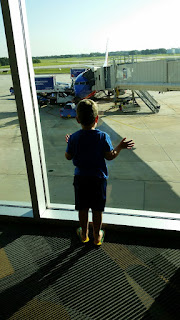
I loved seeing the excitement on our children's faces with each new adventure. The days leading up to our vacation were filled with unbridled enthusiasm. Every day, they would talk about how many more days until our vacation. The shuttle ride from the commuter lot to the airport was a thrill. As the kids were waiting in the terminal for the airport with weighted breath for our airplane to arrive, there was a sense of wonder and awe for the adventure waiting for us. Each night as we were getting ready for bed, our kids would ask "What are we going to do tomorrow?" Their genuine excitement for the next day was contagious! As educators, how are we creating experiences where are students are excited and thrilled for the next day? How do we end the day so our students are more excited about tomorrow than they were today?
Curiosity
For the weeks leading up to Florida, our five year-old son talked and talked about his plan for the beach. He was going to dig a tunnel in the sand leading to the ocean so that the water would come "rushing out and shoot out like a volcano" and if that didn't work he was going to "dig a tunnel in the sand to pop up in the ocean". I didn't want to break his spirit because he was so convinced his plan was going to work. When he tried this the first day at the beach, he realized his great plan was not going to work. He adjusted his thinking to let the waves fill up his trenches as opposed to digging a giant tunnel under the ocean. As educators, how are we fostering our learners' curiosity? Are we quick to correct these curious ideas or do we let them grow and experience them for themselves? How do we let the natural curiosity of our learners help steer the learning process?

Schema
About four years ago, we visited my family on the East Coast and went to a beach in New Hampshire. Our children were not old enough to remember that visit so this trip was essentially the first trip to the beach they would remember. On the first morning, we were going to walk the beach and find sea shells. The walk from the resort to the ocean was a good 400 yards and they were thrilled with the amount of tiny sea shells they were finding right outside the resort. They collected shell after shell in their buckets and pails - so much that their buckets were overflowing. Little did they know that the larger and more intricate shells were waiting for them closer to the ocean. That night, we walked the beach after the tide had gone out and they found more and more shells to add to their collection. They simply did not know that they could find larger and "prettier" shells closer to the ocean. As educators, how are we developing our learners' schema to help them better understand concepts? How are we helping learners bridge the gap between their background knowledge and what is being discussed and learned?

Risk Taking
Our kids LOVED the water. There was even one morning when our youngest woke up at 7 to go swimming when the pool opened. Our oldest is a good swimmer who is just learning how to swim longer distances. Our middle child still uses floaties to help him swim. Our youngest just loves to splash in the water and is still a bit hesitant about being in water where she cannot touch the bottom. The first day, all three children were sitting on the step deciding how to get into the pool. Once they tried it out the new pool and tested the waters, it was non-stop swimming the rest of the week. As educators, how are we developing our own ability to take risks? How are we developing risk-taking in the classrooms? How are we allowing learners at various levels develop a growth-mindset and become risk-takers without the fear of failure?

Re-energize
A couple mornings and evenings, I headed out to the beach for the sunrise and sunset. It was an extremely peaceful time as I was alone on the beach listening to the sounds of the waves crash along the beach. These sounds helped me remember how lucky we are to live in such a place where all of our worries can disappear (at least for a week or so). As educators, how do we take the time to re-energize and re-charge our batteries throughout the school year and summer? How do we take care of ourselves so we can be the best we can be each and every day?
Our trip to the beach was full of exciting times, wonderful memories, and lessons for us all. As we were driving home from the airport, our youngest asked, "When do we get to back?" I am sure this vacation will be one they remember for a long time!
As we were having our last dinner together in Florida, we spent some time talking about our favorite parts of the trip (this is often a dinner table discussion for us we call "Best and Worst" where each family member shares the best part of their day and the worst part of their day to learn from one another). As each family member took the time to share their best and worst parts of the vacation, I took away key lessons from our time together.
Excitement
I loved seeing the excitement on our children's faces with each new adventure. The days leading up to our vacation were filled with unbridled enthusiasm. Every day, they would talk about how many more days until our vacation. The shuttle ride from the commuter lot to the airport was a thrill. As the kids were waiting in the terminal for the airport with weighted breath for our airplane to arrive, there was a sense of wonder and awe for the adventure waiting for us. Each night as we were getting ready for bed, our kids would ask "What are we going to do tomorrow?" Their genuine excitement for the next day was contagious! As educators, how are we creating experiences where are students are excited and thrilled for the next day? How do we end the day so our students are more excited about tomorrow than they were today?

Curiosity
For the weeks leading up to Florida, our five year-old son talked and talked about his plan for the beach. He was going to dig a tunnel in the sand leading to the ocean so that the water would come "rushing out and shoot out like a volcano" and if that didn't work he was going to "dig a tunnel in the sand to pop up in the ocean". I didn't want to break his spirit because he was so convinced his plan was going to work. When he tried this the first day at the beach, he realized his great plan was not going to work. He adjusted his thinking to let the waves fill up his trenches as opposed to digging a giant tunnel under the ocean. As educators, how are we fostering our learners' curiosity? Are we quick to correct these curious ideas or do we let them grow and experience them for themselves? How do we let the natural curiosity of our learners help steer the learning process?

Schema
About four years ago, we visited my family on the East Coast and went to a beach in New Hampshire. Our children were not old enough to remember that visit so this trip was essentially the first trip to the beach they would remember. On the first morning, we were going to walk the beach and find sea shells. The walk from the resort to the ocean was a good 400 yards and they were thrilled with the amount of tiny sea shells they were finding right outside the resort. They collected shell after shell in their buckets and pails - so much that their buckets were overflowing. Little did they know that the larger and more intricate shells were waiting for them closer to the ocean. That night, we walked the beach after the tide had gone out and they found more and more shells to add to their collection. They simply did not know that they could find larger and "prettier" shells closer to the ocean. As educators, how are we developing our learners' schema to help them better understand concepts? How are we helping learners bridge the gap between their background knowledge and what is being discussed and learned?

Risk Taking
Our kids LOVED the water. There was even one morning when our youngest woke up at 7 to go swimming when the pool opened. Our oldest is a good swimmer who is just learning how to swim longer distances. Our middle child still uses floaties to help him swim. Our youngest just loves to splash in the water and is still a bit hesitant about being in water where she cannot touch the bottom. The first day, all three children were sitting on the step deciding how to get into the pool. Once they tried it out the new pool and tested the waters, it was non-stop swimming the rest of the week. As educators, how are we developing our own ability to take risks? How are we developing risk-taking in the classrooms? How are we allowing learners at various levels develop a growth-mindset and become risk-takers without the fear of failure?

Re-energize
A couple mornings and evenings, I headed out to the beach for the sunrise and sunset. It was an extremely peaceful time as I was alone on the beach listening to the sounds of the waves crash along the beach. These sounds helped me remember how lucky we are to live in such a place where all of our worries can disappear (at least for a week or so). As educators, how do we take the time to re-energize and re-charge our batteries throughout the school year and summer? How do we take care of ourselves so we can be the best we can be each and every day?
Our trip to the beach was full of exciting times, wonderful memories, and lessons for us all. As we were driving home from the airport, our youngest asked, "When do we get to back?" I am sure this vacation will be one they remember for a long time!
Subscribe to:
Posts (Atom)